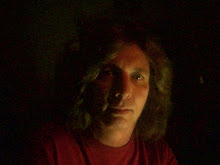
I haven't been blogging for quite awhile now. There have been a lot of life changes. I spent 4 years in New England, specifically Rhode Island and worked doing freelance AV to try and make some money. My marriage to my beautiful wife Nancy collapsed, which was strange as I ended up in a hospital twice because of the severe Panic attacks. I finally found the medication that helped me without the use of Clonazepam. I guess that Nancy didn't believe me when I told her that I felt more like myself. I take full responsibility for the collapse of my marriage. I hurt Nancy badly due to my growing dependence on Clonazepam to try and keep my anxiety in check. I have been diagnosed with severe panic disorder, PTSD and clinical depression. I can't begin to describe what a panic attack is like except to say that it is incapacitating and the worst part is the sheer terror I feel as my mind tries to find out what is causing such holy terror.
So, I am now back in Colorado. I have missed being here as I have traveled around the country due to my job as a broadcast operations technician. I liked New England, Massachusetts especially but I hated Rhode Island, though I don't know why. I believe that Nancy thought I resented moving there, but I didn't. Our second home was a nice, quaint little 3 bedroom house that I named "Lionfish" after the WWII submarine as it was small. But I kept sending out resumes to TV stations in the Boston market and had one interview at the ABC affiliate, WCVB, but they decided to hire a freelance person who had worked there already. So then I fell into AV work which could be hard, but it paid good money for some of the gigs and the income helped us out. The loss of my job at KPNX in Phoenix, took the heart right out of me after being laid off. Then my beautiful mother passed away while I was still in New England.
So, I've applied for SSDI as my kids think I shouldn't work due to the panic attacks, but I would rather work and take my chances. I think it would be good to get back into either a TV station or a radio station' since I love broadcasting.I am now in the middle of rebuilding my life and missing Nancy everyday. I've decided to start blogging again as a way to sort out my feelings and get to a place where I can be me again. I decided to stop taking the Clonazepam for a couple of months and see if I can manage these attacks without the use of benzos.
I will post more as I get back into the swing of things. I am in Greeley, but want to move back to Colorado Springs, where I grew up or in Denver where I can work again at a big market TV station.
Friday, October 16, 2015


Friday, July 19, 2013

"Enfin je me rappelai le pis-aller d’une grande princesse à qui l’on disait que les paysans n’avaient pas de pain, et qui répondit : Qu’ils mangent de la brioche."
"Finally I recalled the stopgap solution of a great princess who was told that the peasants had no bread, and who responded: "Let them eat brioche."
Perhaps in Louis' France they had no bread and would have to settle for 'cake', but in Obama's Amerika, the poor don't need bread or cake, they can eat lobster. So, you can get an Obama phone, "free" health care and a live lobster courtesy of the National Socialist Party, aka, the democrat party.
Sunday, May 15, 2011
So this is Boston
 oh, by the way, this is my pride and joy, a 1974 ES-345 TD Stereo, what a piece of work
Well, we finally made it to Boston, actually to Pembroke where my sister-in-law lives. It's been cloudy, cold and rainy, except for yesterday, which was beautiful. I haven't seen this month green since I left Colorado and the road system here is as foreign as a tea party waiter at a Democratic fund raiser. I haven't felt that well, and I don't know why. I might be the change in climate or the hurried activity the last 3 weeks. Either way I like it. Now all I have to do is find a job and get back to work and I should be good to go. I really like this area, but we haven't decided what part we are going to live in, depending on Nancy's or my job. I am tired of not working and doing nothing but sending out nebulous resumes that I very rarely get responses on. Hopefully, I can find a job here in the metro area in a major station and not some small little no pay one. Though at this point I would take any job paying 15 or more. Oh well. Tomorrow starts a new day and hopefully I will get a call. That's all for now.
Monday, April 25, 2011
Life after KPNX and Phoenix TV
I can't believe it's been almost 2 years since I last posted. So many things have happened in my life and after the winning of "the one", I haven't really felt any real desire to rant about something that is all over the internet. I lost a sister due to diabetic complications (some of my family members including me, believe she overdosed on insulin on purpose, therefore one might call it a suicide)
One the hand, I got married to a very sweet woman who hails from Boston. Imagine that, me an Alabama born, Colorado raised cowboy marrying a New Englander. It's different being married after I have spent so long living by myself and taking care of my sick mom. I also got laid off from a job I loved after 10 years of working my ass for them. I have spent over a year trying to find a new job in TV operations, but the markets are so tight as so many stations are going to automation.
Throughout it all, I have been suffering debilitating anxiety/panic attacks that my doctor doesn't seem to know what causing them. Don't get me wrong, outside stresses contribute to these attacks and aggravate them, but they come on for no reason as I can't consciously figure out what is causing them. Somedays, all I can do is curl up in a ball on the couch and watch tv to try and keep my mind occupied. Oh, I know people say try breathing exercise, yoga, going out for a walk and other such things, but nothing has helped to ease them when I get them except medication. Which brings me to another point.
Most of my life I have suffered from these anxiety attacks. Sometimes they last a few days, a few weeks and lately now, the last 2 years. I have gone to see my doctor any number of times to try and find which medication works and it turns out that xanax worked the best. The problem is, I am a recovering alcoholic and for a doctor to prescribe a narcotic like that is not the smartest idea in the world. Now granted I have not drank consistently through my life. I have had periods of sobriety up to 6 years at one time, the last bout was 4 years. But last November I felt like the wheels were coming off the wagon and I was losing my mind. So I ended up drinking on Nov 25 and then didn't drink again until Dec 27. All this time I was taking xanax which is not good. I woke up the 28th of Dec and decided to quit using any drugs at all or drink. Not such a good idea. I wasn't taking a whole lot of xanax, 1 to 2 mg a day to take the edge off, but it started to become an obsession and I knew I was in trouble. So I asked my wife to take me down to a 30 day drug rehab center to get cleaned up as I didn't want to drink anymore. It wasn't so much the xanax I was afraid of, it was the drinking. And I wasn't going that road as I knew I wouldn't come back this time. Life had become so dark and hopeless that I was staring into the abyss and didn't want to be another drunk that died from alcoholism.
Anyway, this will be my last post from Phoenix as my wife and I decided to move the boston area to seek new opportunities. I've always been fascinated with the northeast and Boston in particular and it should be a new adventure. 16 years in Phoenix is a long time and I feel I've tapped out here as far as TV goes. So I bid Phoenix goodbye and work my way to Boston. And perhaps my next post will be from Boston. To all my friends here, I will miss you dearly and I will try and stay in touch, but for now, I bid Phoenix adieu and move on to new adventures.
slayur
One the hand, I got married to a very sweet woman who hails from Boston. Imagine that, me an Alabama born, Colorado raised cowboy marrying a New Englander. It's different being married after I have spent so long living by myself and taking care of my sick mom. I also got laid off from a job I loved after 10 years of working my ass for them. I have spent over a year trying to find a new job in TV operations, but the markets are so tight as so many stations are going to automation.
Throughout it all, I have been suffering debilitating anxiety/panic attacks that my doctor doesn't seem to know what causing them. Don't get me wrong, outside stresses contribute to these attacks and aggravate them, but they come on for no reason as I can't consciously figure out what is causing them. Somedays, all I can do is curl up in a ball on the couch and watch tv to try and keep my mind occupied. Oh, I know people say try breathing exercise, yoga, going out for a walk and other such things, but nothing has helped to ease them when I get them except medication. Which brings me to another point.
Most of my life I have suffered from these anxiety attacks. Sometimes they last a few days, a few weeks and lately now, the last 2 years. I have gone to see my doctor any number of times to try and find which medication works and it turns out that xanax worked the best. The problem is, I am a recovering alcoholic and for a doctor to prescribe a narcotic like that is not the smartest idea in the world. Now granted I have not drank consistently through my life. I have had periods of sobriety up to 6 years at one time, the last bout was 4 years. But last November I felt like the wheels were coming off the wagon and I was losing my mind. So I ended up drinking on Nov 25 and then didn't drink again until Dec 27. All this time I was taking xanax which is not good. I woke up the 28th of Dec and decided to quit using any drugs at all or drink. Not such a good idea. I wasn't taking a whole lot of xanax, 1 to 2 mg a day to take the edge off, but it started to become an obsession and I knew I was in trouble. So I asked my wife to take me down to a 30 day drug rehab center to get cleaned up as I didn't want to drink anymore. It wasn't so much the xanax I was afraid of, it was the drinking. And I wasn't going that road as I knew I wouldn't come back this time. Life had become so dark and hopeless that I was staring into the abyss and didn't want to be another drunk that died from alcoholism.
Anyway, this will be my last post from Phoenix as my wife and I decided to move the boston area to seek new opportunities. I've always been fascinated with the northeast and Boston in particular and it should be a new adventure. 16 years in Phoenix is a long time and I feel I've tapped out here as far as TV goes. So I bid Phoenix goodbye and work my way to Boston. And perhaps my next post will be from Boston. To all my friends here, I will miss you dearly and I will try and stay in touch, but for now, I bid Phoenix adieu and move on to new adventures.
slayur
Sunday, August 16, 2009
What the healthcare bill really says
The Health Care Bill: What HR 3200, ‘‘America’s Affordable Health Choices Act of 2009,” Says
John David Lewis
August 6, 2009
What does the bill, HR 3200, short-titled ‘‘America’s Affordable Health Choices Act of 2009,” actually say about major health care issues? I here pose a few questions in no particular order, citing relevant passages and offering a brief evaluation after each set of passages.
This bill is 1017 pages long. It is knee-deep in legalese and references to other federal regulations and laws. I have only touched pieces of the bill here. For instance, I have not considered the establishment of (1) “Health Choices Commissio0ner” (Section 141); (2) a “Health Insurance Exchange,” (Section 201), basically a government run insurance scheme to coordinate all insurance activity; (3) a Public Health Insurance Option (Section 221); and similar provisions.
This is the evaluation of someone who is neither a physician nor a legal professional. I am citizen, concerned about this bill’s effects on my freedom as an American. I would rather have used my time in other ways—but this is too important to ignore.
We may answer one question up front: How will the government will pay for all this? Higher taxes, more borrowing, printing money, cutting payments, or rationing services—there are no other options. We will all pay for this, enrolled in the government “option” or not.
(All bold type within the text of the bill is added for emphasis.)
1. 1. WILL THE PLAN RATION MEDICAL CARE?
This is what the bill says, pages 284-288, SEC. 1151. REDUCING POTENTIALLY PREVENTABLE HOSPITAL READMISSIONS:
‘(ii) EXCLUSION OF CERTAIN READMISSIONS.—For purposes of clause (i), with respect to a hospital, excess readmissions shall not include readmissions for an applicable condition for which there are fewer than a minimum number (as determined by the Secretary) of discharges for such applicable condition for the applicable period and such hospital.
and, under “Definitions”:
‘‘(A) APPLICABLE CONDITION.—The term ‘applicable condition’ means, subject to subparagraph (B), a condition or procedure selected by the Secretary . . .
and:
‘‘(E) READMISSION.—The term ‘readmission’ means, in the case of an individual who is discharged from an applicable hospital, the admission of the individual to the same or another applicable hospital within a time period specified by the Secretary from the date of such discharge.
and:
‘‘(6) LIMITATIONS ON REVIEW.—There shall be no administrative or judicial review under section 1869, section 1878, or otherwise of— . . .
‘‘(C) the measures of readmissions . . .
EVALUATION OF THE PASSAGES:
1. This section amends the Social Security Act
2. The government has the power to determine what constitutes an “applicable [medical] condition.”
3. The government has the power to determine who is allowed readmission into a hospital.
4. This determination will be made by statistics: when enough people have been discharged for the same condition, an individual may be readmitted.
5. This is government rationing, pure, simple, and straight up.
6. There can be no judicial review of decisions made here. The Secretary is above the courts.
7. The plan also allows the government to prohibit hospitals from expanding without federal permission: page 317-318.
2. Will the plan punish Americans who try to opt out?
What the bill says, pages 167-168, section 401, TAX ON INDIVIDUALS WITHOUT ACCEPTABLE HEALTH CARE COVERAGE:
‘‘(a) TAX IMPOSED.—In the case of any individual who does not meet the requirements of subsection (d) at any time during the taxable year, there is hereby imposed a tax equal to 2.5 percent of the excess of—
(1) the taxpayer’s modified adjusted gross income for the taxable year, over
(2) the amount of gross income specified in section 6012(a)(1) with respect to the taxpayer. . . .”
EVALUATION OF THE PASSAGE:
1. This section amends the Internal Revenue Code.
2. Anyone caught without acceptable coverage and not in the government plan will pay a special tax.
3. The IRS will be a major enforcement mechanism for the plan.
3. what constitutes “acceptable” coverage?
Here is what the bill says, pages 26-30, SEC. 122, ESSENTIAL BENEFITS PACKAGE DEFINED:
(a) IN GENERAL.—In this division, the term ‘‘essential benefits package’’ means health benefits coverage, consistent with standards adopted under section 124 to ensure the provision of quality health care and financial security . . .
(b) MINIMUM SERVICES TO BE COVERED.—The items and services described in this subsection are the following:
(1) Hospitalization.
(2) Outpatient hospital and outpatient clinic services . . .
(3) Professional services of physicians and other health professionals.
(4) Such services, equipment, and supplies incident to the services of a physician’s or a health professional’s delivery of care . . .
(5) Prescription drugs.
(6) Rehabilitative and habilitative services.
(7) Mental health and substance use disorder services.
(8) Preventive services . . .
(9) Maternity care.
(10) Well baby and well child care . . .
(c) REQUIREMENTS RELATING TO COST-SHARING AND MINIMUM ACTUARIAL VALUE . . .
(3) MINIMUM ACTUARIAL VALUE.—
(A) IN GENERAL.—The cost-sharing under the essential benefits package shall be designed to provide a level of coverage that is designed to provide benefits that are actuarially equivalent to approximately 70 percent of the full actuarial value of the benefits provided under the reference benefits package described in subparagraph (B).
EVALUATION OF THE PASSAGES:
1. The bill defines “acceptable coverage” and leaves no room for choice in this regard.
2. By setting a minimum 70% actuarial value of benefits, the bill makes health plans in which individuals pay for routine services, but carry insurance only for catastrophic events, (such as Health Savings Accounts) illegal.
4. Will the PLAN destroy private health insurance?
Here is what it requires, for businesses with payrolls greater than $400,000 per year. (The bill uses “contribution” to refer to mandatory payments to the government plan.) Pages 149-150, SEC. 313, EMPLOYER CONTRIBUTIONS IN LIEU OF COVERAGE
(a) IN GENERAL.—A contribution is made in accordance with this section with respect to an employee if such contribution is equal to an amount equal to 8 percent of the average wages paid by the employer during the period of enrollment (determined by taking into account all employees of the employer and in such manner as the Commissioner provides, including rules providing for the appropriate aggregation of related employers). Any such contribution—
(1) shall be paid to the Health Choices Commissioner for deposit into the Health Insurance Exchange Trust Fund, and
(2) shall not be applied against the premium of the employee under the Exchange-participating health benefits plan in which the employee is enrolled.
(The bill then includes a sliding scale of payments for business with less than $400,000 in annual payroll.)
The Bill also reserves, for the government, the power to determine an acceptable benefits plan: page 24, SEC. 115. ENSURING ADEQUACY OF PROVIDER NETWORKS.
5 (a) IN GENERAL.—A qualified health benefits plan that uses a provider network for items and services shall meet such standards respecting provider networks as the Commissioner may establish to assure the adequacy of such networks in ensuring enrollee access to such items and services and transparency in the cost-sharing differentials between in-network coverage and out-of-network coverage.
EVALUATION OF THE PASSAGES:
1. The bill does not prohibit a person from buying private insurance.
2. Small businesses—with say 8-10 employees—will either have to provide insurance to federal standards, or pay an 8% payroll tax. Business costs for health care are higher than this, especially considering administrative costs. Any competitive business that tries to stay with a private plan will face a payroll disadvantage against competitors who go with the government “option.”
3. The pressure for business owners to terminate the private plans will be enormous.
4. With employers ending plans, millions of Americans will lose their private coverage, and fewer companies will offer it.
5. The Commissioner (meaning, always, the bureaucrats) will determine whether a particular network of physicians, hospitals and insurance is acceptable.
6. With private insurance starved, many people enrolled in the government “option” will have no place else to go.
5. Does the plan TAX successful Americans more THAN OTHERS?
Here is what the bill says, pages 197-198, SEC. 441. SURCHARGE ON HIGH INCOME INDIVIDUALS
‘‘SEC. 59C. SURCHARGE ON HIGH INCOME INDIVIDUALS.
‘‘(a) GENERAL RULE.—In the case of a taxpayer other than a corporation, there is hereby imposed (in addition to any other tax imposed by this subtitle) a tax equal to—
‘‘(1) 1 percent of so much of the modified adjusted gross income of the taxpayer as exceeds $350,000 but does not exceed $500,000,
‘‘(2) 1.5 percent of so much of the modified adjusted gross income of the taxpayer as exceeds $500,000 but does not exceed $1,000,000, and
‘‘(3) 5.4 percent of so much of the modified adjusted gross income of the taxpayer as exceeds $1,000,000.
EVALUATION OF THE PASSAGE:
1. This bill amends the Internal Revenue Code.
2. Tax surcharges are levied on those with the highest incomes.
3. The plan manipulates the tax code to redistribute their wealth.
4. Successful business owners will bear the highest cost of this plan.
6.
6. Does THE PLAN ALLOW THE GOVERNMENT TO set FEES FOR SERVICES?
What it says, page 124, Sec. 223, PAYMENT RATES FOR ITEMS AND SERVICES:
(d) CONSTRUCTION.—Nothing in this subtitle shall be construed as limiting the Secretary’s authority to correct for payments that are excessive or deficient, taking into account the provisions of section 221(a) and the amounts paid for similar health care providers and services under other Exchange-participating health benefits plans.
(e) CONSTRUCTION.—Nothing in this subtitle shall be construed as affecting the authority of the Secretary to establish payment rates, including payments to provide for the more efficient delivery of services, such as the initiatives provided for under section 224.
EVALUATION OF THE PASSAGES:
The government’s authority to set payments is basically unlimited.
The official will decide what constitutes “excessive,” “deficient,” and “efficient” payments and services.
7. Will THE PLAN increase the power of government officials to SCRUTINIZE our private affairs?
What it says, pages 195-196, SEC. 431. DISCLOSURES TO CARRY OUT HEALTH INSURANCE EXCHANGE SUBSIDIES.
‘‘(A) IN GENERAL.—The Secretary, upon written request from the Health Choices Commissioner or the head of a State-based health insurance exchange approved for operation under section 208 of the America’s Affordable Health Choices Act of 2009, shall disclose to officers and employees of the Health Choices Administration or such State-based health insurance exchange, as the case may be, return information of any taxpayer whose income is relevant in determining any affordability credit described in subtitle C of title II of the America’s Affordable Health Choices Act of 2009. Such return information shall be limited to—
‘‘(i) taxpayer identity information with respect to such taxpayer,
‘‘(ii) the filing status of such taxpayer,
‘‘(iii) the modified adjusted gross income of such taxpayer (as defined in section 59B(e)(5)),
‘‘(iv) the number of dependents of the taxpayer,
‘‘(v) such other information as is prescribed by the Secretary by regulation as might indicate whether the taxpayer is eligible for such affordability credits (and the amount thereof), and
‘‘(vi) the taxable year with respect to which the preceding information relates or, if applicable, the fact that such information is not available.
And, page 145, section 312, EMPLOYER RESPONSIBILITY TO CONTRIBUTE TOWARDS EMPLOYEE AND DEPENDENT COVERAGE:
(3) PROVISION OF INFORMATION.—The employer provides the Health Choices Commissioner, the Secretary of Labor, the Secretary of Health and Human Services, and the Secretary of the Treasury, as applicable, with such information as the Commissioner may require to ascertain compliance with the requirements of this section.
EVALUATION OF THE PASSAGE:
1. This section amends the Internal Revenue Code
2. The bill opens up income tax return information to federal officials.
3. Any stated “limits” to such information are circumvented by item (v), which allows federal officials to decide what information is needed.
4. Employers are required to report whatever information the government says it needs to enforce the plan.
8. 8. Does the plan automatically enroll Americans in the GOVERNMENT plan?
What it says, page 102, Section 205, Outreach and enrollment of Exchange-eligible individuals and employers in Exchange-participating health benefits plan:
(3) AUTOMATIC ENROLLMENT OF MEDICAID ELIGIBLE INDIVIDUALS INTO MEDICAID.—The Commissioner shall provide for a process under which an individual who is described in section 202(d)(3) and has not elected to enroll in an Exchange-participating health benefits plan is automatically enrolled under Medicaid.
And, page 145, section 312:
(4) AUTOENROLLMENT OF EMPLOYEES.—The employer provides for autoenrollment of the employee in accordance with subsection (c).
EVALUATION OF THE PASSAGES:
1. Do nothing and you are in.
2. Employers are responsible for automatically enrolling people who still work.
9. 9. Does THE PLAN exempt federal OFFICIALS from COURT REVIEW?
What it says, page 124, Section 223, PAYMENT RATES FOR ITEMS AND SERVICES:
(f) LIMITATIONS ON REVIEW.—There shall be no administrative or judicial review of a payment rate or methodology established under this section or under section 224.
And, page 256, SEC. 1123. PAYMENTS FOR EFFICIENT AREAS.
‘‘(C) LIMITATION ON REVIEW.—There shall be no administrative or judicial review under section 1869, 1878, or otherwise, respecting—
‘‘(i) the identification of a county or other area under subparagraph (A); or
‘‘(ii) the assignment of a postal ZIP Code to a county or other area under subparagraph (B).
EVALUATION OF THE PASSAGES:
1. Sec. 1123 amends the Social Security Act, to allow the Secretary to identify areas of the country that underutilize the government’s plan “based on per capita spending.”
2. Parts of the plan are set above the review of the courts.
John David Lewis
August 6, 2009
What does the bill, HR 3200, short-titled ‘‘America’s Affordable Health Choices Act of 2009,” actually say about major health care issues? I here pose a few questions in no particular order, citing relevant passages and offering a brief evaluation after each set of passages.
This bill is 1017 pages long. It is knee-deep in legalese and references to other federal regulations and laws. I have only touched pieces of the bill here. For instance, I have not considered the establishment of (1) “Health Choices Commissio0ner” (Section 141); (2) a “Health Insurance Exchange,” (Section 201), basically a government run insurance scheme to coordinate all insurance activity; (3) a Public Health Insurance Option (Section 221); and similar provisions.
This is the evaluation of someone who is neither a physician nor a legal professional. I am citizen, concerned about this bill’s effects on my freedom as an American. I would rather have used my time in other ways—but this is too important to ignore.
We may answer one question up front: How will the government will pay for all this? Higher taxes, more borrowing, printing money, cutting payments, or rationing services—there are no other options. We will all pay for this, enrolled in the government “option” or not.
(All bold type within the text of the bill is added for emphasis.)
1. 1. WILL THE PLAN RATION MEDICAL CARE?
This is what the bill says, pages 284-288, SEC. 1151. REDUCING POTENTIALLY PREVENTABLE HOSPITAL READMISSIONS:
‘(ii) EXCLUSION OF CERTAIN READMISSIONS.—For purposes of clause (i), with respect to a hospital, excess readmissions shall not include readmissions for an applicable condition for which there are fewer than a minimum number (as determined by the Secretary) of discharges for such applicable condition for the applicable period and such hospital.
and, under “Definitions”:
‘‘(A) APPLICABLE CONDITION.—The term ‘applicable condition’ means, subject to subparagraph (B), a condition or procedure selected by the Secretary . . .
and:
‘‘(E) READMISSION.—The term ‘readmission’ means, in the case of an individual who is discharged from an applicable hospital, the admission of the individual to the same or another applicable hospital within a time period specified by the Secretary from the date of such discharge.
and:
‘‘(6) LIMITATIONS ON REVIEW.—There shall be no administrative or judicial review under section 1869, section 1878, or otherwise of— . . .
‘‘(C) the measures of readmissions . . .
EVALUATION OF THE PASSAGES:
1. This section amends the Social Security Act
2. The government has the power to determine what constitutes an “applicable [medical] condition.”
3. The government has the power to determine who is allowed readmission into a hospital.
4. This determination will be made by statistics: when enough people have been discharged for the same condition, an individual may be readmitted.
5. This is government rationing, pure, simple, and straight up.
6. There can be no judicial review of decisions made here. The Secretary is above the courts.
7. The plan also allows the government to prohibit hospitals from expanding without federal permission: page 317-318.
2. Will the plan punish Americans who try to opt out?
What the bill says, pages 167-168, section 401, TAX ON INDIVIDUALS WITHOUT ACCEPTABLE HEALTH CARE COVERAGE:
‘‘(a) TAX IMPOSED.—In the case of any individual who does not meet the requirements of subsection (d) at any time during the taxable year, there is hereby imposed a tax equal to 2.5 percent of the excess of—
(1) the taxpayer’s modified adjusted gross income for the taxable year, over
(2) the amount of gross income specified in section 6012(a)(1) with respect to the taxpayer. . . .”
EVALUATION OF THE PASSAGE:
1. This section amends the Internal Revenue Code.
2. Anyone caught without acceptable coverage and not in the government plan will pay a special tax.
3. The IRS will be a major enforcement mechanism for the plan.
3. what constitutes “acceptable” coverage?
Here is what the bill says, pages 26-30, SEC. 122, ESSENTIAL BENEFITS PACKAGE DEFINED:
(a) IN GENERAL.—In this division, the term ‘‘essential benefits package’’ means health benefits coverage, consistent with standards adopted under section 124 to ensure the provision of quality health care and financial security . . .
(b) MINIMUM SERVICES TO BE COVERED.—The items and services described in this subsection are the following:
(1) Hospitalization.
(2) Outpatient hospital and outpatient clinic services . . .
(3) Professional services of physicians and other health professionals.
(4) Such services, equipment, and supplies incident to the services of a physician’s or a health professional’s delivery of care . . .
(5) Prescription drugs.
(6) Rehabilitative and habilitative services.
(7) Mental health and substance use disorder services.
(8) Preventive services . . .
(9) Maternity care.
(10) Well baby and well child care . . .
(c) REQUIREMENTS RELATING TO COST-SHARING AND MINIMUM ACTUARIAL VALUE . . .
(3) MINIMUM ACTUARIAL VALUE.—
(A) IN GENERAL.—The cost-sharing under the essential benefits package shall be designed to provide a level of coverage that is designed to provide benefits that are actuarially equivalent to approximately 70 percent of the full actuarial value of the benefits provided under the reference benefits package described in subparagraph (B).
EVALUATION OF THE PASSAGES:
1. The bill defines “acceptable coverage” and leaves no room for choice in this regard.
2. By setting a minimum 70% actuarial value of benefits, the bill makes health plans in which individuals pay for routine services, but carry insurance only for catastrophic events, (such as Health Savings Accounts) illegal.
4. Will the PLAN destroy private health insurance?
Here is what it requires, for businesses with payrolls greater than $400,000 per year. (The bill uses “contribution” to refer to mandatory payments to the government plan.) Pages 149-150, SEC. 313, EMPLOYER CONTRIBUTIONS IN LIEU OF COVERAGE
(a) IN GENERAL.—A contribution is made in accordance with this section with respect to an employee if such contribution is equal to an amount equal to 8 percent of the average wages paid by the employer during the period of enrollment (determined by taking into account all employees of the employer and in such manner as the Commissioner provides, including rules providing for the appropriate aggregation of related employers). Any such contribution—
(1) shall be paid to the Health Choices Commissioner for deposit into the Health Insurance Exchange Trust Fund, and
(2) shall not be applied against the premium of the employee under the Exchange-participating health benefits plan in which the employee is enrolled.
(The bill then includes a sliding scale of payments for business with less than $400,000 in annual payroll.)
The Bill also reserves, for the government, the power to determine an acceptable benefits plan: page 24, SEC. 115. ENSURING ADEQUACY OF PROVIDER NETWORKS.
5 (a) IN GENERAL.—A qualified health benefits plan that uses a provider network for items and services shall meet such standards respecting provider networks as the Commissioner may establish to assure the adequacy of such networks in ensuring enrollee access to such items and services and transparency in the cost-sharing differentials between in-network coverage and out-of-network coverage.
EVALUATION OF THE PASSAGES:
1. The bill does not prohibit a person from buying private insurance.
2. Small businesses—with say 8-10 employees—will either have to provide insurance to federal standards, or pay an 8% payroll tax. Business costs for health care are higher than this, especially considering administrative costs. Any competitive business that tries to stay with a private plan will face a payroll disadvantage against competitors who go with the government “option.”
3. The pressure for business owners to terminate the private plans will be enormous.
4. With employers ending plans, millions of Americans will lose their private coverage, and fewer companies will offer it.
5. The Commissioner (meaning, always, the bureaucrats) will determine whether a particular network of physicians, hospitals and insurance is acceptable.
6. With private insurance starved, many people enrolled in the government “option” will have no place else to go.
5. Does the plan TAX successful Americans more THAN OTHERS?
Here is what the bill says, pages 197-198, SEC. 441. SURCHARGE ON HIGH INCOME INDIVIDUALS
‘‘SEC. 59C. SURCHARGE ON HIGH INCOME INDIVIDUALS.
‘‘(a) GENERAL RULE.—In the case of a taxpayer other than a corporation, there is hereby imposed (in addition to any other tax imposed by this subtitle) a tax equal to—
‘‘(1) 1 percent of so much of the modified adjusted gross income of the taxpayer as exceeds $350,000 but does not exceed $500,000,
‘‘(2) 1.5 percent of so much of the modified adjusted gross income of the taxpayer as exceeds $500,000 but does not exceed $1,000,000, and
‘‘(3) 5.4 percent of so much of the modified adjusted gross income of the taxpayer as exceeds $1,000,000.
EVALUATION OF THE PASSAGE:
1. This bill amends the Internal Revenue Code.
2. Tax surcharges are levied on those with the highest incomes.
3. The plan manipulates the tax code to redistribute their wealth.
4. Successful business owners will bear the highest cost of this plan.
6.
6. Does THE PLAN ALLOW THE GOVERNMENT TO set FEES FOR SERVICES?
What it says, page 124, Sec. 223, PAYMENT RATES FOR ITEMS AND SERVICES:
(d) CONSTRUCTION.—Nothing in this subtitle shall be construed as limiting the Secretary’s authority to correct for payments that are excessive or deficient, taking into account the provisions of section 221(a) and the amounts paid for similar health care providers and services under other Exchange-participating health benefits plans.
(e) CONSTRUCTION.—Nothing in this subtitle shall be construed as affecting the authority of the Secretary to establish payment rates, including payments to provide for the more efficient delivery of services, such as the initiatives provided for under section 224.
EVALUATION OF THE PASSAGES:
The government’s authority to set payments is basically unlimited.
The official will decide what constitutes “excessive,” “deficient,” and “efficient” payments and services.
7. Will THE PLAN increase the power of government officials to SCRUTINIZE our private affairs?
What it says, pages 195-196, SEC. 431. DISCLOSURES TO CARRY OUT HEALTH INSURANCE EXCHANGE SUBSIDIES.
‘‘(A) IN GENERAL.—The Secretary, upon written request from the Health Choices Commissioner or the head of a State-based health insurance exchange approved for operation under section 208 of the America’s Affordable Health Choices Act of 2009, shall disclose to officers and employees of the Health Choices Administration or such State-based health insurance exchange, as the case may be, return information of any taxpayer whose income is relevant in determining any affordability credit described in subtitle C of title II of the America’s Affordable Health Choices Act of 2009. Such return information shall be limited to—
‘‘(i) taxpayer identity information with respect to such taxpayer,
‘‘(ii) the filing status of such taxpayer,
‘‘(iii) the modified adjusted gross income of such taxpayer (as defined in section 59B(e)(5)),
‘‘(iv) the number of dependents of the taxpayer,
‘‘(v) such other information as is prescribed by the Secretary by regulation as might indicate whether the taxpayer is eligible for such affordability credits (and the amount thereof), and
‘‘(vi) the taxable year with respect to which the preceding information relates or, if applicable, the fact that such information is not available.
And, page 145, section 312, EMPLOYER RESPONSIBILITY TO CONTRIBUTE TOWARDS EMPLOYEE AND DEPENDENT COVERAGE:
(3) PROVISION OF INFORMATION.—The employer provides the Health Choices Commissioner, the Secretary of Labor, the Secretary of Health and Human Services, and the Secretary of the Treasury, as applicable, with such information as the Commissioner may require to ascertain compliance with the requirements of this section.
EVALUATION OF THE PASSAGE:
1. This section amends the Internal Revenue Code
2. The bill opens up income tax return information to federal officials.
3. Any stated “limits” to such information are circumvented by item (v), which allows federal officials to decide what information is needed.
4. Employers are required to report whatever information the government says it needs to enforce the plan.
8. 8. Does the plan automatically enroll Americans in the GOVERNMENT plan?
What it says, page 102, Section 205, Outreach and enrollment of Exchange-eligible individuals and employers in Exchange-participating health benefits plan:
(3) AUTOMATIC ENROLLMENT OF MEDICAID ELIGIBLE INDIVIDUALS INTO MEDICAID.—The Commissioner shall provide for a process under which an individual who is described in section 202(d)(3) and has not elected to enroll in an Exchange-participating health benefits plan is automatically enrolled under Medicaid.
And, page 145, section 312:
(4) AUTOENROLLMENT OF EMPLOYEES.—The employer provides for autoenrollment of the employee in accordance with subsection (c).
EVALUATION OF THE PASSAGES:
1. Do nothing and you are in.
2. Employers are responsible for automatically enrolling people who still work.
9. 9. Does THE PLAN exempt federal OFFICIALS from COURT REVIEW?
What it says, page 124, Section 223, PAYMENT RATES FOR ITEMS AND SERVICES:
(f) LIMITATIONS ON REVIEW.—There shall be no administrative or judicial review of a payment rate or methodology established under this section or under section 224.
And, page 256, SEC. 1123. PAYMENTS FOR EFFICIENT AREAS.
‘‘(C) LIMITATION ON REVIEW.—There shall be no administrative or judicial review under section 1869, 1878, or otherwise, respecting—
‘‘(i) the identification of a county or other area under subparagraph (A); or
‘‘(ii) the assignment of a postal ZIP Code to a county or other area under subparagraph (B).
EVALUATION OF THE PASSAGES:
1. Sec. 1123 amends the Social Security Act, to allow the Secretary to identify areas of the country that underutilize the government’s plan “based on per capita spending.”
2. Parts of the plan are set above the review of the courts.
Wednesday, August 12, 2009
Monday, August 10, 2009
Saturday, August 1, 2009

Sunday, July 26, 2009

Saturday, July 25, 2009
Friday, July 24, 2009

Sunday, July 19, 2009

Hillary apologizes for America's role in "Blowhards Smarming"
Once again, the blame America first crowd is out doing it again.
Sec. Clinton visits India, urges help vs. terror
By ROBERT BURNS (AP) – 16 hours ago
MUMBAI, India — U.S. Secretary of State Hillary Rodham Clinton opened a three-day visit to India on Saturday by urging India not to repeat American mistakes in contributing to global pollution, and she passionately defended U.S. demands for help in fighting terrorism.
"We acknowledge now with President Obama that we have made mistakes in the United States, and we along with other developed countries have contributed most significantly to the problem that we face with climate change," she said. "We are hoping a great country like India will not make the same mistakes."
She was referring to Obama's statement in Italy earlier this month that the U.S. had "sometimes fallen short" of its responsibilities in controlling its carbon emissions.
Speaking at a news conference on the pool side patio of the Taj Mahal Palace & Hotel, which was strewn with bodies after terrorists attacked this coastal city last November, she cast India and the United States as allies in the fight against terrorism.
"Yesterday's bombings in Jakarta, Indonesia, provide a painful reminder that the threat of such violent extremism is still very real. It is global. It is ruthless. It is nihilistic and it must be stopped," she said.
"We have a great sense of solidarity and sympathy, having gone through what we did on 9/11," she added.
Her voice rising, Clinton insisted that the U.S. demand for international action against terrorist should not be taken lightly.
"We know how important (it is). We are fighting wars to end the threat of terrorism against us, our friends and allies around the world." She said India can choose its own way of contributing but must be part of a broader effort to defeat the threat.
"We expect everyone" who shares the U.S. goal of a more stable world "to take strong action to prevent terrorism from taking root on their soil and making sure that terrorists are not trained and deployed" from their territory to carry out attacks elsewhere, she added.
Earlier, Clinton attended a ceremony commemorating the Mumbai attack, which killed 166 and raised tensions between nuclear rivals India and Pakistan. At the event were five staffers from the Oberoi Hotel and 10 from the Taj, including general manager Karambir Kang, who lost his wife and two children during the three-day siege.
The event was closed to reporters.
In a memorial book she wrote: "Americans share a solidarity with this city and nation. Both our people have experienced the senseless and searing effects of violent extremism. And both can be grateful and proud of the heroism of brave men and women whose courage saved lives and prevented greater harm on 26/11 and 9/11. Now it is up to all nations and people who seek peace and progress to work together. Let us rid the world of hatred and extremism that produces such nihilistic violence."
She also met with 11 Indian business leaders, including Mukesh Ambani, chairman of Reliance Industries, the largest privately held company in India.
Echoing remarks made by Ambani at the meeting, Clinton said that India should leapfrog the developed world to come up with its own innovative way to encourage environmentally friendly growth.
"Just as India went from a few years ago having very few mobile phones to now having more than 500 million mostly cell phones by leapfrogging over the infrastructure we built for telephone service, we believe India is innovative and entrepreneurial enough to figure out how to deal with climate change while continuing to lift people out of poverty and develop at a rapid rate," she said.
Seeking to assuage Indian concerns that the U.S. pressured India into making concessions to Pakistan despite that nation's failure to bring to justice the perpetrators of the Mumbai attack, Clinton emphasized that the U.S. respects India's sovereign right to make its own decisions.
"Discussion between India and Pakistan is between India and Pakistan," she said.
The visit marked a return to the world stage for Clinton, who has been slowed since mid-June by an arm injury that forced her to cancel plans to attend international meetings in Italy and Greece last month and to accompany President Barack Obama on his visit to Russia earlier this month.
Clinton is scheduled to hold talks Sunday and Monday in New Delhi with Indian government officials on a wide range of issues, including nuclear nonproliferation, strengthening trade ties and combatting climate change. She is to attend talks in Thailand later in the week with representatives of the Association of Southeast Asian Nations.
Associated Press writer Erika Kinetz in Mumbai contributed to this report
Sec. Clinton visits India, urges help vs. terror
By ROBERT BURNS (AP) – 16 hours ago
MUMBAI, India — U.S. Secretary of State Hillary Rodham Clinton opened a three-day visit to India on Saturday by urging India not to repeat American mistakes in contributing to global pollution, and she passionately defended U.S. demands for help in fighting terrorism.
"We acknowledge now with President Obama that we have made mistakes in the United States, and we along with other developed countries have contributed most significantly to the problem that we face with climate change," she said. "We are hoping a great country like India will not make the same mistakes."
She was referring to Obama's statement in Italy earlier this month that the U.S. had "sometimes fallen short" of its responsibilities in controlling its carbon emissions.
Speaking at a news conference on the pool side patio of the Taj Mahal Palace & Hotel, which was strewn with bodies after terrorists attacked this coastal city last November, she cast India and the United States as allies in the fight against terrorism.
"Yesterday's bombings in Jakarta, Indonesia, provide a painful reminder that the threat of such violent extremism is still very real. It is global. It is ruthless. It is nihilistic and it must be stopped," she said.
"We have a great sense of solidarity and sympathy, having gone through what we did on 9/11," she added.
Her voice rising, Clinton insisted that the U.S. demand for international action against terrorist should not be taken lightly.
"We know how important (it is). We are fighting wars to end the threat of terrorism against us, our friends and allies around the world." She said India can choose its own way of contributing but must be part of a broader effort to defeat the threat.
"We expect everyone" who shares the U.S. goal of a more stable world "to take strong action to prevent terrorism from taking root on their soil and making sure that terrorists are not trained and deployed" from their territory to carry out attacks elsewhere, she added.
Earlier, Clinton attended a ceremony commemorating the Mumbai attack, which killed 166 and raised tensions between nuclear rivals India and Pakistan. At the event were five staffers from the Oberoi Hotel and 10 from the Taj, including general manager Karambir Kang, who lost his wife and two children during the three-day siege.
The event was closed to reporters.
In a memorial book she wrote: "Americans share a solidarity with this city and nation. Both our people have experienced the senseless and searing effects of violent extremism. And both can be grateful and proud of the heroism of brave men and women whose courage saved lives and prevented greater harm on 26/11 and 9/11. Now it is up to all nations and people who seek peace and progress to work together. Let us rid the world of hatred and extremism that produces such nihilistic violence."
She also met with 11 Indian business leaders, including Mukesh Ambani, chairman of Reliance Industries, the largest privately held company in India.
Echoing remarks made by Ambani at the meeting, Clinton said that India should leapfrog the developed world to come up with its own innovative way to encourage environmentally friendly growth.
"Just as India went from a few years ago having very few mobile phones to now having more than 500 million mostly cell phones by leapfrogging over the infrastructure we built for telephone service, we believe India is innovative and entrepreneurial enough to figure out how to deal with climate change while continuing to lift people out of poverty and develop at a rapid rate," she said.
Seeking to assuage Indian concerns that the U.S. pressured India into making concessions to Pakistan despite that nation's failure to bring to justice the perpetrators of the Mumbai attack, Clinton emphasized that the U.S. respects India's sovereign right to make its own decisions.
"Discussion between India and Pakistan is between India and Pakistan," she said.
The visit marked a return to the world stage for Clinton, who has been slowed since mid-June by an arm injury that forced her to cancel plans to attend international meetings in Italy and Greece last month and to accompany President Barack Obama on his visit to Russia earlier this month.
Clinton is scheduled to hold talks Sunday and Monday in New Delhi with Indian government officials on a wide range of issues, including nuclear nonproliferation, strengthening trade ties and combatting climate change. She is to attend talks in Thailand later in the week with representatives of the Association of Southeast Asian Nations.
Associated Press writer Erika Kinetz in Mumbai contributed to this report
A very moving tribute to a fallen soldier
 I got this from Shari, my good good friend. She sent me the link. I found this to be very touching and watched the whole thing with tears in my eyes just seeing all the people who came out to honor this hero. Watch the whole thing and it will move you too. This is one thing you will never see from the left, honoring a fallen soldier.
John C. Beale, age 39, husband, father, and member of the Georgia National Guard was killed in Afghanistan on June 4th, 2009. He was a Staff Sergeant with the 1st Battalion, 108th Reconnaissance, Surveillance and Target Acquisition Squadron, 48th Infantry Brigade Combat Team. He is survived by his wife and by a 12-year-old son and an 8-year-old daughter.
His friends and neighbors in Georgia turned out to honor him when he returned. His coffin arrived at the airport in Peachtree City, Georgia on Thursday, June 11 and was taken by motorcade to a funeral home in his hometown of McDonough. Word had traveled rapidly through the Georgia communities and they turned out in large numbers to line the route of the motorcade to honor a fallen soldier.
Traveling in the motorcade was state Rep. Steve Davis, who put together this video of the crowds that lined the route. There is something very significant in seeing the outpouring of support and respect here.
You can join in honoring this serviceman’s sacrifice by watching the video. It runs 12 and a half minutes.
Saturday, July 18, 2009
The passing of a liberal Icon
 It was sad to hear that Walter Cronkite died yesterday. I remember him from my childhood and my early days in TV. While professing to be "politically neutral", it was only obvious that Cronkite was a decided liberal, as most so-called journalists are. I remember being a kid when he was on the air as Apollo 11 landed and him covering the Vietnam war. After the Tet offensive, he said the best we could hope for "is a negotiated and honorable peace." Just as any true liberal does, he got scared at the prospect that the NVA were actually attacking Saigon, although, even General Giap said later, the Tet offensive was a failure. His reporting was always skewed toward the left (as usual) and if anything, he mis-led the viewing American public that the US had somehow lost the war, which we lost in part due to his reporting. We did not lose militarily, though war is always a means to an end. The North Vietnamese said that if Nixon had kept bombing Hanoi in Linebacker 2, they would have probably sued for peace as their country was being hammered.
I am sure people are remembering Cronkite fondly, probably because he was on the air for so long, his coverage of the assasination of JFK, the moon landing, Vietnam and Watergate, but for me, as I got older and wiser and started really learning about "TV news", I realized how skewered left it was and still is. Back then we had 3 networks, so opposing viewpoints were hard to come by and people always think if it's on the news, it must be true. It's only after the rise of Limbaugh, Hannity, Fox News and other such "right wing" sources, do we see that the MSM is left-biased and always has been. And any reporter that says he is objective must be viewed with suspicion as you can never leave your bias totally out of the story. All reporters are subjective since they are interpreting the news through their eyes. Cronkite set an example for generations to come as far as "TV Journalism" is concerned, with many people modeling their style on his. But Cronkite didn't have a competing news organization to balance his "storytelling". There was no Fox news and most of the stories CBS or any network news org did at that time, and still do, come from what they read in the NY Times or the Washington post. It was the Washington post that broke open Watergate, Cronkite just followed the lead. What would have happened with the Vietnam war if there was a "fair and balanced" network offering a different viewpoint. Again, we didn't lose the war militarily, we lost politically. And what people forgot is that it was a democrat that got us into that war, was a democrat that kept us in that war and it took a republican to get us out.
Still many people remember him fondly and I do to an extent. But I think it should be noted that "Uncle Walter" was not the objective reporter he appeared to be. All one has to do is go back and really look at his work.
The White Rodney King
This comes from the Hon. James David Manning. He's talking about the coming revolution that will happen due to Comrade Obama's policies. Whether or not it happens as he says, I do believe that people are getting tired of what Obama is doing. He is trying to turn this country into a socialist nation and I think Mr. Manning has hit it on the head.
Friday, July 17, 2009

 ISN'T IT A SHAME THAT A TRUE HERO IS ALL BUT FORGOTTEN BY OUR MEDIA, BECAUSE THEY ARE totally obsessed with the death of Michael Jackson, who never did anything heroic in his life.!!
Ed Freeman
You're an 19 year old kid. You're critically wounded, and dying in the jungle in the Ia Drang Valley , 11-14-1965, LZ X-ray, Vietnam . Your infantry unit is outnumbered 8-1, and the enemy fire is so intense, from 100 or 200 yards away, that your own Infantry Commander has ordered the Medi-Vac helicopters to stop coming in.
You're lying there, listening to the enemy machine guns, and you know you're not getting out. Your family is half way around the world-12,000 miles away-and you'll never see them again. As the world starts to fade in and out, you know this is the day.
Then, over the machine gun noise, you faintly hear that sound of helicopter, and you look up to see an un-armed Huey, but it doesn't seem real, because no Medi-Vac markings are on it.
Ed Freeman is coming for you. He's not Medi- Vac, so it's not his job, but he's flying his Huey down into the machine gun fire, after the Medi-Vacs were ordered not to come.
He's coming anyway. And he drops it in, and sits there in the machine gun fire, as they load 2 or 3 of you on board.
Then he flies you up and out through the gunfire, to the doctors and nurses.
And, he kept coming back.13 more times.and took about 30 of you and your buddies out, who would never have gotten out.
Medal of Honor Recipient, Ed Freeman, died last Wednesday, March 25th, 2009 at the age of 80, in Boise, ID. May God rest his soul....and so did Michael Jackson.......
Medal of Honor Winner
Ed Freeman!
Since the media didn't give him the coverage he deserves, send this to every red-blooded American you know.
Thursday, July 16, 2009
Subscribe to:
Posts (Atom)